View articles on Scott Steinmann’s amazing and historic comeback victory with the LumberKings and other press.
- AP - The Big Story
- Cincinnati.com
- Sports Illustrated
- Kitsap Sun
- Clinton Herald
- The Glendale Star
- Rocky Point 360
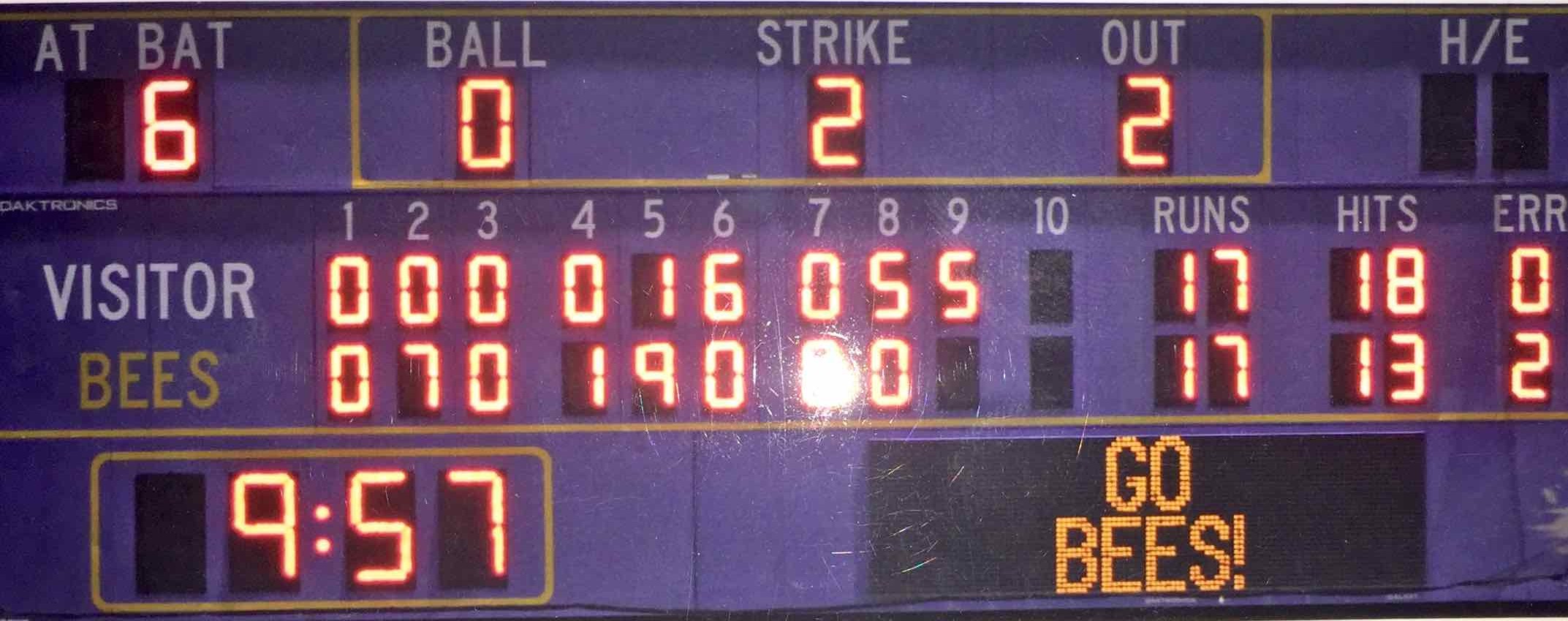
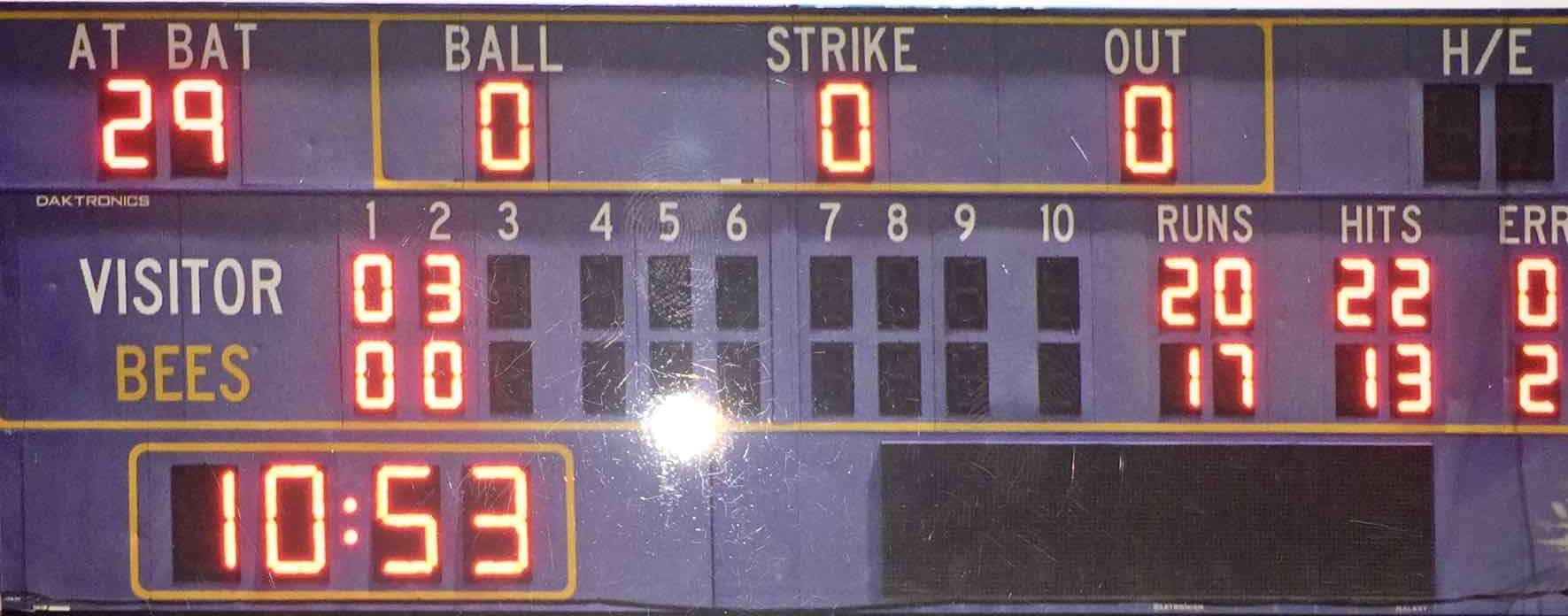
Down 17-1 after 5, Clinton wins 20-17 in 12
By RONALD BLUM May. 8, 2014 11:14 PM EDT
Trailing 17-1 after five innings, the Clinton LumberKings were down — in their moods as well as on the scoreboard. Then the players, all prospects hoping to one day make the major leagues, started thinking back to last weekend, when they overcame an eight-run deficit.
“We kind of had that in the back of our heads. I was like, ‘Hey, it’s not over ’til it’s over,'” second baseman Lonnie Kauppila recalled, invoking Yogi Berra’s famous saying. “It was a long shot. But once we got into the ninth inning, it was like, ‘Hey, we can do it again.'”
Seattle’s farm team in the Class A Midwest League started chipping away. And by the time Wednesday night’s game was over, the LumberKings had beaten the Burlington Bees 20-17 over 12 innings in one of the greatest comebacks in professional baseball history.
“I’m still in shock,” Clinton manager Scott Steinmann said Thursday in a telephone interview with The Associated Press. “I’ve never been a part of that. I don’t think too many people have in the game.”
A crowd of 558 turned out on a warm and breezy night at 3,200-capacity Community Field in Burlington, Iowa, home of the Los Angeles’ Angels’ Midwest League affiliate.
Burlington burst ahead with a seven-run second and made it 8-0 in the fourth. After Clinton scored in the fifth, the Bees added nine runs in the bottom half to take a 16-run lead.
“The coach had a meeting with us a couple days ago saying it’s a long season, we need to grind out at-bats. That was my mindset,” said Clinton designated hitter Justin Seager, the 21-year-old younger brother of Mariners third baseman Kyle Seager.
Clinton had rallied from a 12-4, sixth-inning deficit Saturday in a 16-13 win at the Wisconsin Timber Rattlers, a Milwaukee farm team in Appleton. The LumberKings started swinging the wood Wednesday in a six-run sixth that cut the deficit to 10, closed to 17-12 with a five-run eighth and then got a run in the ninth on four straight one-out singles off Ben Carlson.
Marcus Littlewood, a second-round draft pick in 2010, followed with a moment of drama, sending a 2-1 fastball from Alan Busenitz over the wall in right-center field for a grand slam. Now the score was 17-17.
“Rounding the bases,” Littlewood said, “I kind of realized what we had done. Pretty incredible. Probably the funnest game I’ve ever been part of.”
Players came out of the dugout to meet Littlewood, who played for the U.S. at the 2008 Youth Pan-Am Games.
“Everybody was excited like we won the World Series,” Steinmann said.
Seager, who had four hits, put Clinton ahead in the 12th with a bases-loaded RBI grounder off Trevor Foss (0-2). Kauppila, a 22-year-old drafted from Stanford last year, followed with a two-run single.
Emilio Pagan (1-0), Clinton’s fifth pitcher, had thrown three innings. Kauppila had been told to start warming up in the 11th. He hadn’t pitched since 2010, when he took the mound for one inning as a senior at Burbank High School in California.
“Other than that, was probably eighth grade,” he said.
Clinton pitching coach Cibney Bello called former big leaguer Chris Gwynn, Seattle’s director of player development, to get permission for Kauppila to take the mound. Kauppila was told to throw at 85 percent velocity and to stick to fastballs and changeups.
“I wasn’t allowed to throw a slider, which was pretty unfortunate,” he said.
Kauppila got three straight outs on two liners and a popup. After 3 hours, 28 minutes, the epic was over. Clinton had tied Burlington for fourth place at 16-15, six games back of Kane County.
The National Association of Professional Baseball Leagues, which governs the minors, didn’t have any records of a 16-run comeback. The largest deficit overcame in a big league victory is 12 runs, accomplished by Detroit against the Chicago White Sox on June 18, 1911; by the Philadelphia Athletics versus Cleveland on June 15, 1925; and by the Indians over Seattle on Aug. 5, 2001.
Having checked out of their rooms at the Catfish Bend Casino Resort, Clinton’s players had postgame pizza and then got ready for the 3-hour-plus bus ride home. Family members and friends sent emails and texts congratulating them.
“I told them a few minutes ago not to do it again,” Steinmann said Thursday before laughing, “because I’m tired of answering these phone calls.”
Scott Steinmann’s Clinton LumberKings Comeback Historic
John Erardi, 4:15 p.m. EDT May 15, 2014
(Photo: Clinton LumberKings)
Having grown up playing baseball in Cincinnati (Colerain High School and Miami University), having attended Game 2 of the 1990 World Series (double down the line by Joe Oliver in the 12th inning off Dennis Eckersley scoring Billy Bates), and having played three years of minor league baseball and managed or coached another 12 in the Seattle Mariners organization, Scott Steinmann knew he had seen a lot.
But he hadn’t seen everything.
And the former catcher doesn’t figure to ever see anything quite like the game his Clinton LumberKings played last week at Community Field in Burlington, Iowa, when they trailed 17-1 going into the sixth inning.
”I was thinking, ‘6-and-4 on this road trip isn’t bad,’ ” recalled said Steinmann, chuckling at the memory. ”Even after we scored six runs in the top of the sixth, we were still 10 behind. But I know our guys. They’re a little bit crazy. They had just come from eight runs back four days earlier. So, they hadn’t given up by any means.”
Besides the six runs in the sixth, the LumberKings scored five in the 8th (17-12) and five more in the ninth to tie it (four of those five runs came on a grand slam) and three in the top of the 12th to go ahead for good, 20-17.
Minor league records aren’t as complete as the majors’, so nobody knows where the 16-run comeback ranks in pro baseball as a whole. But it tops by four runs anything that ever happened in the majors.
* On Aug. 5, 2001, the Cleveland Indians came back from being 12-0 down to the Mariners after three innings, and won 15-14 in 11 innings.
* On June 18, 1911, the Detroit Tigers rallied from 12 back to beat the Chicago White Sox.
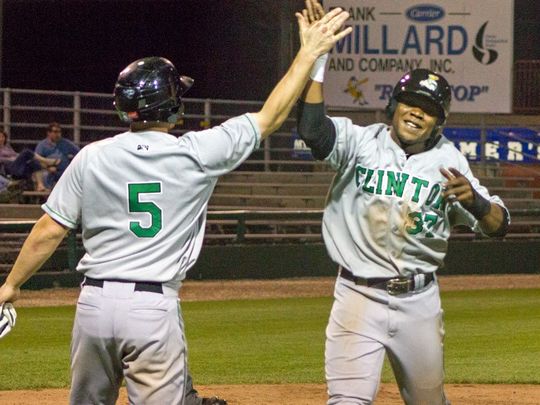
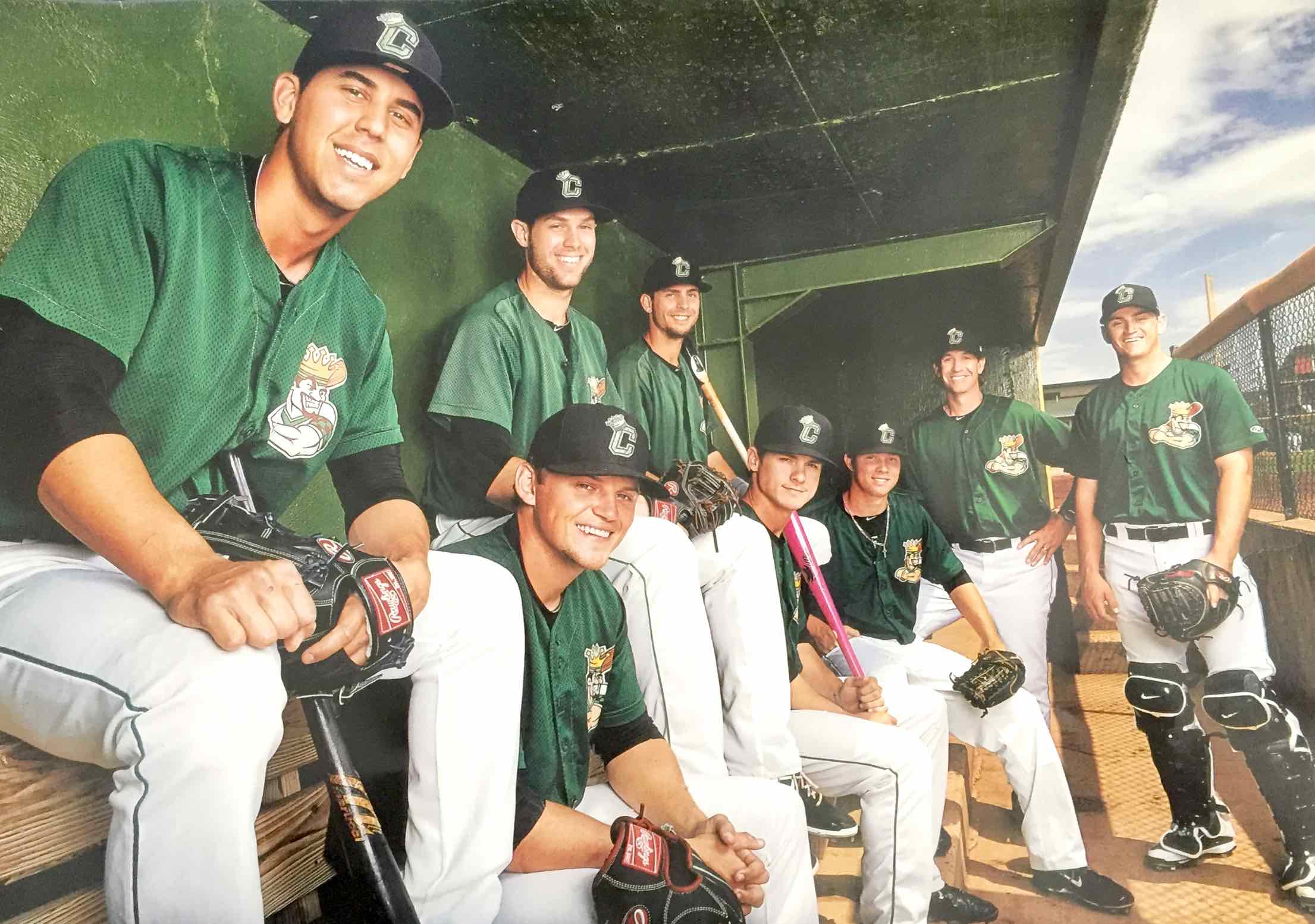
Action shot from Clinton’s wild 16-run comeback May 7 (Photo: Clinton LumberKings)
* On June 15, 1925, the Philadelphia Athletics scored 13 times in the eighth inning and went on to beat the Indians 17-15.
Steinmann said it’s difficult to say which was the most memorable part of his team’s comeback – he certainly y won’t forget that his bullpen held Burlington scoreless in innings six through 12, thus allowing for the offense’s heroics — but it’s hard to top that 9th inning slam.
”I was at third base (coaching) and when we got the deficit down to 10 , I could see past our hitter into our dugout and our guys were really into it,” Steinmann said. ”They were laughing, joking, having a good time. I could see they believed they could do it… Our team’s a little crazy that way.”
Of course, the fact that Clinton second baseman Lonnie Kauppila pitched the 12th to get the save was memorable, too.
”It didn’t dawn on me at first how amazing this all was,” Steinmann said. ”I was trying to manage the game, make sure we had enough pitchers, all that. But then I started getting calls from reporters – Sports llustrated, Good Morning America – and it sort of hit me. But I don’t think it’s fully sunk in yet. I still can’t fathom it.
”Maybe after the season, I’ll be able to sit back and take a look at hit and get a better grasp of it,” he said.
When a reporter told Steinmann that 3 hours and 28 minutes for all that action is pretty impressive – there are a lot of nine-inning games at Great American Ball Park that last almost that long – he agreed.
”Thirty-seven runs, a lot of action on the bases, not that many strikeouts, 100 at-bats, that’s pretty darn good,” he said.
One of Steinmann’s claims-to-fame is that back in 1997, he played all nine positions over the course of the season for then-Wisconsin (Midwest League) manager Gary Varsho, a former Red, in Steinmann’s second year of pro ball.
Usually, it is the catcher’s position that is the touchy one in completing the nine-position rotation, but Steinman was a catcher, so that was no problem.
But it’s also true that it’s typically the highly athletic middle infielders who even try playing for the cycle. It’s a tribute to Steinmann’s athleticism, attitude and well-earned reputation as a baller that he was able to do it. It didn’t start out as a goal, it just developed. The final position he played was center field, one he had never before played.
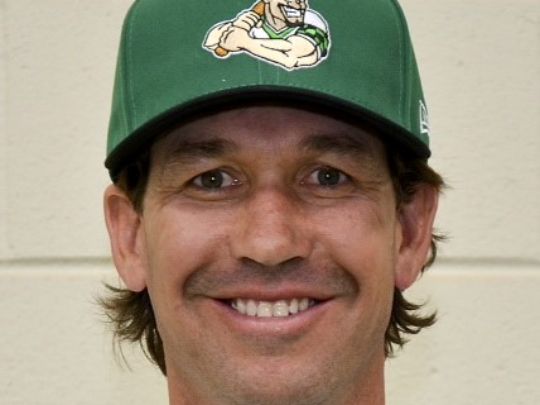
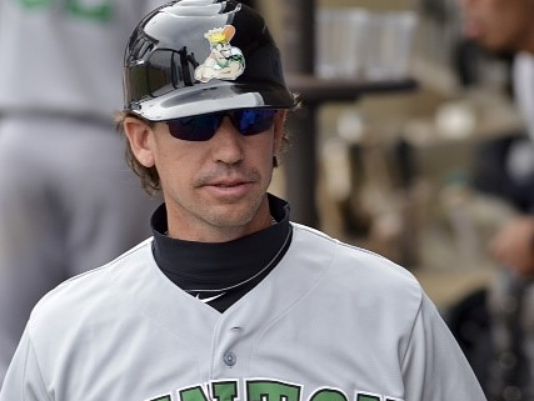
Clinton (Iowa) manager Scott Steinmann, Cincinnati native (Photo: Clinton LumberKings)
Yes, 1997 was an interesting year, but it’s hard to top what happened a week ago Wednesday night in Burlington.
”Baseball’s unique (among the team sports) because there’s no clock,” Steinmann said. ”The potential for a game to go on forever, or to allow for a comeback like this, is always a possibility. It’s amazing to have been a part of it. I’m sure everybody involved feels the same way. There were only about 50 fans left at the end, but they’ve sure got a story to tell now. We all do.”
By Thomas Lake
They remember when Vita Blue pitched here in 1968, when the ballpark burn in ’71, when a homerun smacked the flagpole in right center and ricocheted back onto the field. The fans of Burlington, Iowa, have seen some amazing things and 90 years of minor league baseball. But nothing like the game onWednesday, May 7, when they’re Bees had a 16 run lead and gave it up.
Steinmann a company man for the Mariners
The former catcher will manage the Everett AquaSox
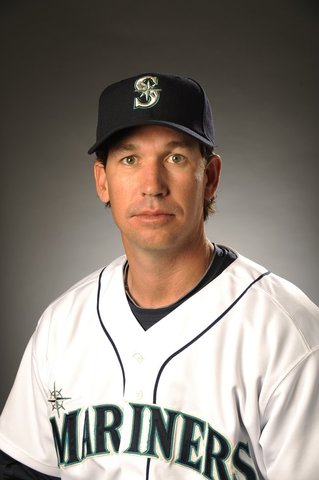
PEORIA, Ariz. – During the pursuit of a major league dream that didn’t come true, Scott Steinmann discovered a passion.
A minor league catcher for less than three seasons with the Seattle Mariners, Steinmann has been a coach or manager since 1998 at nearly every level of the organization. This year, he’ll manage the Class A Everett AquaSox, the team he played with when he began his pro career in 1996.
“This is my calling — to be a mentor, to help a young man become a man,” said Steinmann, 37. “It’s not only to help them grow in baseball, but to grow and mature as men.”
Steinmann was 22 when he signed with the Mariners as an undrafted free agent catcher, having grown up in Cincinnati hoping to emulate his childhood hero, Johnny Bench.
He played his first pro game with the AquaSox in 1996, a season that featured one of his most memorable games. He was the catcher when Randy Johnson pitched two innings on an injury rehab assignment at Everett Memorial Stadium.
“There were so many people crammed into that stadium,” Steinmann said. “Having that swarm of people around, I felt like a big-leaguer for a day.”
Steinmann wanted to become a big-leaguer for life. Less than two years later, that goal ended.
Eighteen games into the 1998 season at Class AA Orlando, with a .189 batting average in 125 minor league games over two-plus years, minor league director Benny Looper delivered some harsh news.
“Benny pulled me in and said they’d run out of a spot for me,” Steinmann said. “It’s very tough to hear those words. You realize that it’s been taken away from you, that you didn’t get a chance to reach your goal.”
Then Looper said something else. He told Steinmann that the Mariners could release him and let him try to sign with another team, but they’d also welcome him to stay with the organization as a coach.
“I realized that if I wasn’t showing that glimmer of hope yet, I should go on with my life and go into coaching,” he said. “I wanted to stay in baseball. Coaching is what I wanted to do anyway, but it just came a little sooner than I’d thought. It was a great gesture that they offered me a job at such a young age.”
He was 24 then and ready to absorb every piece of knowledge he could get. Working the next 15 years under longtime coaches such as Roger Hansen, Mike Goff, Pedro Grifol and Andy Stankiewicz, Steinmann learned about catching, hitting, managing and molding young men.
He finished the 1998 season coaching at Class A Lancaster, then became a roving minor league catching instructor the next year. He coached at Class A Wisconsin in 2000 and 2001, then at high-A San Bernardino in 2002.
Steinmann got his first managing job in 2003 at rookie-level Peoria, where he produced winning records the next two seasons. Managing Class A Wisconsin in 2005, his team won its division title and took a lead into the late innings of the deciding game of the championship series before losing to South Bend.
Steinmann managed three more seasons — at Class A High Desert in 2007, Class AA West Tennessee in 2009 and Class A Clinton in 2009.
But never got as close to a championship as he did in 2005, until last year. As a coach with the AquaSox in 2010, he was part of the team that won the Northwest League championship, capped by a 6-1 victory over Spokane on Sept. 12 at Everett Memorial Stadium.
“I’d been close before, but to celebrate on the field like that you have visions of that,” Steinmann said. “That was a great feeling.”
Making it more special, he said, was to see longtime athletic trainer Spyder Webb celebrate a championship in his 30th year with the organization.
“I came in with Spyder and he’s close to retiring,” Steinmann said. “To be there when he won his second championship in his career, that was special.”
Today, during a ceremony on the minor league practice fields at the Mariners’ spring training complex, Steinmann and others with the AquaSox last year will receive their Northwest League championship rings.
Then he’ll begin the three-month-long process of preparing another group of players for a season in Everett as the AquaSox’s manager in 2011.
It’s sort of a full-circle return to the place his pro career started in 1996. He has good memories of that season.
“It wasn’t a good year offensively for me, but I still enjoyed my time in Everett,” Steinmann said. “I liked playing up there and I always remembered the National Anthems when we would look out over the outfield wall and see the mountains in the background. That was just beautiful, and to see that every night at home was a great way to start your day.”
Steinmann describes himself as an aggressive manager who isn’t afraid to have his teams steal, hit-and-run, bunt or harass baserunners with pickoffs by the catchers. He wants his players to push themselves to the limit of their ability — even beyond — in order to teach them.
“I’d rather players make mistakes at that level than (later in their careers) on TV where everybody sees them,” he said. “We want to make as many mistakes as we can because that means we have an opportunity to teach, an opportunity to learn, an opportunity to grow. Be aggressive, learn what you can do and what you can’t do. That’s the only way they learn themselves, and that’s the only way we learn them so we know what to work on.”
Steinmann has managed every level but the major leagues and Class AAA, but at this stage of his life he prefers the short-season lower levels. Working with a June-to-September club like the AquaSox allows him to remain at extended spring training in Arizona, where he makes his home with wife Suzy and their children, 15-year-old daughter Alex and 14-year-old son Ben.
“There are a lot of sacrifices in this game, but the one thing you realize talking to people outside of baseball is that there are sacrifices in their jobs too,” Steinmann said. “There are things they have to give up for their families for their career development. My sacrifice is just a little bit of time away. I want to be around my family until my wife’s kids get out of school.”
Then, he can resume his quest to reach the major leagues.
“I still want to get to the big leagues as a coach,” Steinmann said. “The security of getting your pension from the big leagues is tremendous. There’s a big difference between a minor league pension and a major league full pension. For the security of my family that would be great.
“But if it doesn’t work out, I’ll be fine. I love what I do and I have a passion for what I do. I can’t believe they pay me for what I do, that’s how much I love it.”
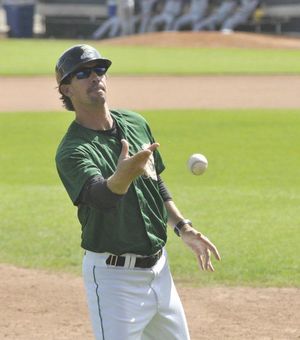
Steinmann returns to the LumberKings
’15 marks manager’s third year with team
Posted: Tuesday, January 13, 2015 6:00 am
CLINTON — Scott Steinmann will return to Clinton to manage the LumberKings in 2015.
Pitching coach Cibney Bello, who also spent 2014 with the LumberKings, is returning, too, while 2013 hitting coach Mike Kinkade will come back.
Steinmann is spending his offseason in Chandler, Arizona, not far from the Mariners’ spring training facility. He says while he has enjoyed the warm Arizona weather, he is excited to return to Iowa.
“I enjoy Clinton, and I enjoy the level of baseball that the LumberKings are in,” Steinmann said. “I feel it’s an honor for the Mariners to put me there, so I’m proud to say I’m coming back.”
Steinmann and the LumberKings went 61-77 in 2014. He got the job just days before the season when Chris Prieto accepted a position with the big-league club in Seattle.
It’s the first time Steinmann, who also managed Clinton in 2009, will have spent back-to-back seasons with the same farm team in a decade. He spent two seasons as coach in the Midwest League at Wisconsin in 2000 and 2001, then spent the 2003-04 seasons as manager of the Peoria (Arizona) Mariners.
The LumberKings’ expectations will be set higher in 2015, according to Clinton General Manager Ted Tornow.
“The mark of a manager in the minor leagues is a little different — you develop the kids for the next level; I know that, I get that,” Tornow said. “But, we’ve been told by the Mariners that they put more of an emphasis on winning. You learn how to win. We definitely want to win at least 62 games next year.”
Steinmann’s biggest goal for this season?
“Don’t get down by 16 runs again,” Steinmann said with a laugh.
Steinmann was referring to a game last May against Burlington where the LumberKings trailed 16-1 and came back to win in extra innings. The game was christened as MiLB.com Game of the Year as voted on by fans.
“Every year, I learn how to manage people better,” Steinmann said. “Every year, I feel like I grow; how to put things together better, and learn more about the industry, and I hope to bring that growth to the players.”
Another year in Clinton means another year away from his family in Arizona for an extended amount of time. The only times Steinmann really gets to visit family is if he goes home during the All-Star break or if they come to visit.
“I got one kid out to college already, and got the other one to get his grades turned around, (and) I thought my wife was in a comfortable place, too, so I was comfortable with my family life,” Steinmann said. “Getting back to a full season I was OK with. That made the decision easy to make.”
Meanwhile, Tornow is excited to welcome Kinkade back to the LumberKings staff.
“That’ll be good. Mike is a good guy,” Tornow said. “I just remember him being a tough out during his playing days. He’ll bring a new level of toughness to the clubhouse. He was a real competitor, and did we have that last year? Having seen Mike two years ago, our players will get the benefit of his expertise. I think Mike has a unique approach to the game.”
Like Prieto, Kinkade was called up at the last minute to become the hitting coach at Double-A Jackson last season. The Olympic gold medal winner at the 2000 Sydney Olympics played for the Mets, Orioles, and Dodgers over his MLB career and became a coach in 2011.
The LumberKings’ home opener is April 9 vs. Beloit.
Rookies all around

Posted: Wednesday, July 9, 2003 11:00 pm
Rookie-level baseball is designed to be a development ground for some potential Major League Baseball prospects.
But Peoria Mariners first-year manager Scott Steinmann is learning lessons of his own the hard way.
“I learn something new every day,” said Steinmann, a one-time college player who made it to the AA level before going into coaching. “Today, it was keeping score.”
It is a 112 degree day at Peoria Sports Complex and the Mariners have just beaten the Arizona A’s 7-6.
Or at least the Mariners thought they had won.
“What was the score?” a base coach for the A’s yelled to Steinmann as the 29-year-old manager exited the field across the pitcher’s mound toward the clubhouse.
“I checked five times. It was 7-6,” Steinmann replied.
“We have 6-6,” the A’s coach said. “We’re checking on it. We don’t want to protest or anything, but we just want to get it right.”
Steinmann joked, “Well, call us back out if you want to finish it.”
Rookie League baseball is not the most glamorous life. Peoria’s team is one of nine in the Arizona League, where most teams play without scoreboards, fans or big paychecks.
The Mariners’ 30-plus-member team nwhich constantly fluctuates with players coming and going throughout the 2-1/2-month season n lives in a hotel across the street from the sports facility, eats at the Glendale and Peoria shops in and around the Arrowhead Towne Center and awaits the big call up to the next level of the Minor Leagues.
Steinmann is in the same boat. As a young coach, the one-time catcher at the University of Miami (Ohio) is trying to leave his mark in the Mariners’ organization.
“I’d like to move up, so wherever this takes me, it takes me,” Steinmann said. “Originally, I thought I might want to coach college, but when this offer came up to coach a professional team, I couldn’t pass it up. We’ll see where it goes. I might not like it in five years. Who knows?”
Before the season, Steinmann had worked as a hitting instructor throughout the lower levels of the Mariners’ Minor League system since 1998.
With stops in Lancaster, Calif.; Everett, Wash.; San Bernadino, Calif.; and Appleton, Wis., the Cincinnati native certainly can compare Peoria Sports Complex’s facilities with most Minor League stadiums.
“We’ve got everything we need here n batting cages, lights, a Major League clubhouse,” Steinmann said. “This is the best setup in the Minor Leagues.”
But unlike the upper levels of the Minor Leagues, winning is the least of importance at the rookie level, Steinmann said.
The focus is on development. If winning happens, Steinmann said, then it is “icing on the cake.”
“We want to develop a winning attitude, but we will never sacrifice a player’s future development for a win. To win is nice, but we’re all about development.”
The low importance of winning might normally throw fans into a fit, but these Mariners do not have many fans.
Steinmann joked, “If we have anybody at our games it is because they are forced to go through blood relation.”
Indeed, there were four fans folding up chairs and leaving the Peoria Sports Complex after the Mariners’ “disputed” win over the A’s earlier this week.
“Trust me. I don’t think they’re stragglers from the community coming to these games,” Steinmann said with a laugh.
The Seattle Mariners’ farm department assigns players to the various Minor League levels, but Major League Baseball puts guidelines on who is eligible for the Rookie League level.
Rosters are capped at 35 and no more than eight players can be 20 years old or older. Additionally, only two players 21 and older are allowed. At least 10 pitchers must be on the roster and players are only allowed two years of prior service.
While the chances of players at the rookie level making the big leagues is slim, some do slip by.
The same goes for managers. At least Steinmann hopes so.
Home Run for 5th Major League Coaches Clinic



Spring Training is right around the corner, though some of the boys of summer were already warming up this past weekend in Puerto Peñasco at the 5th Annual Major League Coaches Clinic. The one day intensive clinic, organized principally by the Youth Sports Foundation and its President Rick Busa, attracts local youth baseball teams and offers aspiring players a chance to work with the pros. Each January since 2009 the YSF, along with support from the Municipal Sports Institute, invites young baseball fans to a day of fun alongside Major League Coaches as they run through drills of pitching, fielding, running, and batting. At one point, the clinic drew over 200 children to the training day. Despite a drop in numbers in 2013 due to a rainy day and last minute change in venue to the local gym, this year approximately 80 youth ranging in age from 7 – 17 took part in the intensive clinic held at the baseball stadium at the entrance to town. Members from the Rolling Rockies wheelchair basketball team were also hand to help with translation.
On Friday prior to the one-day clinic, Busa along with John “Shotcaller” Monteiro on behalf of the YSF, along with Municipal Sports Institute Director José Alfonso Palacio, City Councilwoman Elia Bustamante, current Tiburones manager and former Naranjeros fielder
(1998-2010) Hector Garcia, and emcee Rosie Glover welcomed four of the six coaches taking part in this year’s clinic: Scott Steinman (original promoter of the clinic along with Rick Busa), Henry Cotto, Gary Thurman, and Andrew Lorraine. Additional first-time coaches included Troy Pierce and JD Ramirez. All of the former four have been involved in the yearly clinics in the past, Cotto and Steinman having participated in all of them, Thurman in four, and Lorraine now for a second time.
In describing the 2014 clinic, Steinman explained, “We’ll run a similar clinic to what we’ve had in the past – when we’ve done it outside; we’ll run through some hitting, infield, outfield, base running, and pitching. We’ll have five stations and rotate around hopefully teach some kids how to play the game a little bit, enjoy themselves, and have a little bit of fun at it.”
Getting a jump on things, dressed in pin stripes and donning a Yankees cap, young Dax (new resident to Puerto Peñasco, first baseman, and t-ball batter) jumped right in at the end of the conference to greet the players and gather the first autographs of the weekend!
In looking at the future of the Annual Major League Coaches Clinic, Steinman remarked, “We love coming down, we love the community down here. Every time I call these guys during the Fall and the early Winter, they say ‘alright, let’s go.’ They are all excited about coming down so we’re going to continue doing it. We enjoy the community, and we see it just keep going. Hopefully we can keep it growing bigger every year.”
Scott Steinmann – signed in 1995 and played until 1998 in the Seattle Mariners system. As a minor league player he played all 9 positions one year. During the 1998 season he was asked to become a coach and has been managing and/or coaching ever since.
Henry Cotto – Ten seasons in Major League Baseball (1984-1993), and one season in Japan for the Yomiuri Giants in 1994, winning a world championship. 1996 – 2008 coach with Seattle Mariners, and currently roving outfield instructor for the San Francisco Giants farm system.
Gary Thurman – Nine Major League seasons with Kansas City Royals, Detroit Tigers, Seattle Mariners, and New York Mets; drafted by the Royals in 1st round (21st pick) of 1983 amateur draft; 2000 – 07 manager and hitting coach in the Seattle system; 2008 – 11 base running coordinator for the Cleveland Indians; first base/outfield/base-running coach for the Miami Marlins for 2012 season.
Andrew Lorraine – In his six-year major league career, he pitched for the California Angels, Chicago White Sox, Oakland Athletics, Seattle Mariners, Chicago Cubs, Cleveland Indians, and Milwaukee Brewers. He also played with the Chinese Professional League. He is currently the pitching coach for the Seattle Mariners in the minor league.
JD Ramirez – Started with the independent Salt Lake City Trappers of the Pioneer League in 89 until contract was purchased by Montreal Expos Organization that summer. Played a couple of seasons with the Expos and finished in West Palm under the guidance of Felipe Alou before getting a chance with the Angels Organization in 1994. Coach for the D’backs Baseball Academy for 12 years while Coaching the Varsity team at South Mountain High School in Phoenix for 5 years.
*Coach Troy Pierce also joined the group for the Saturday clinic.